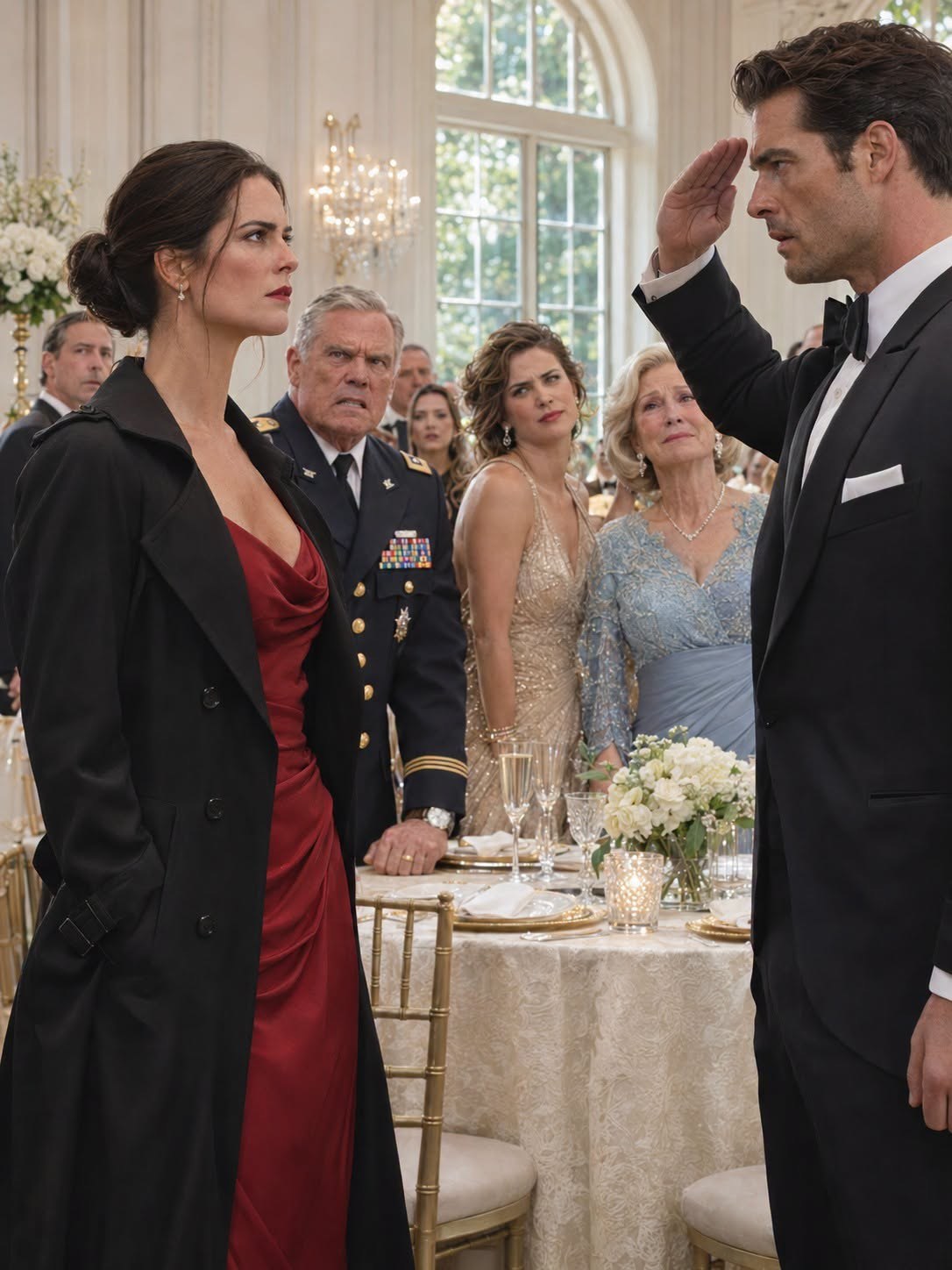
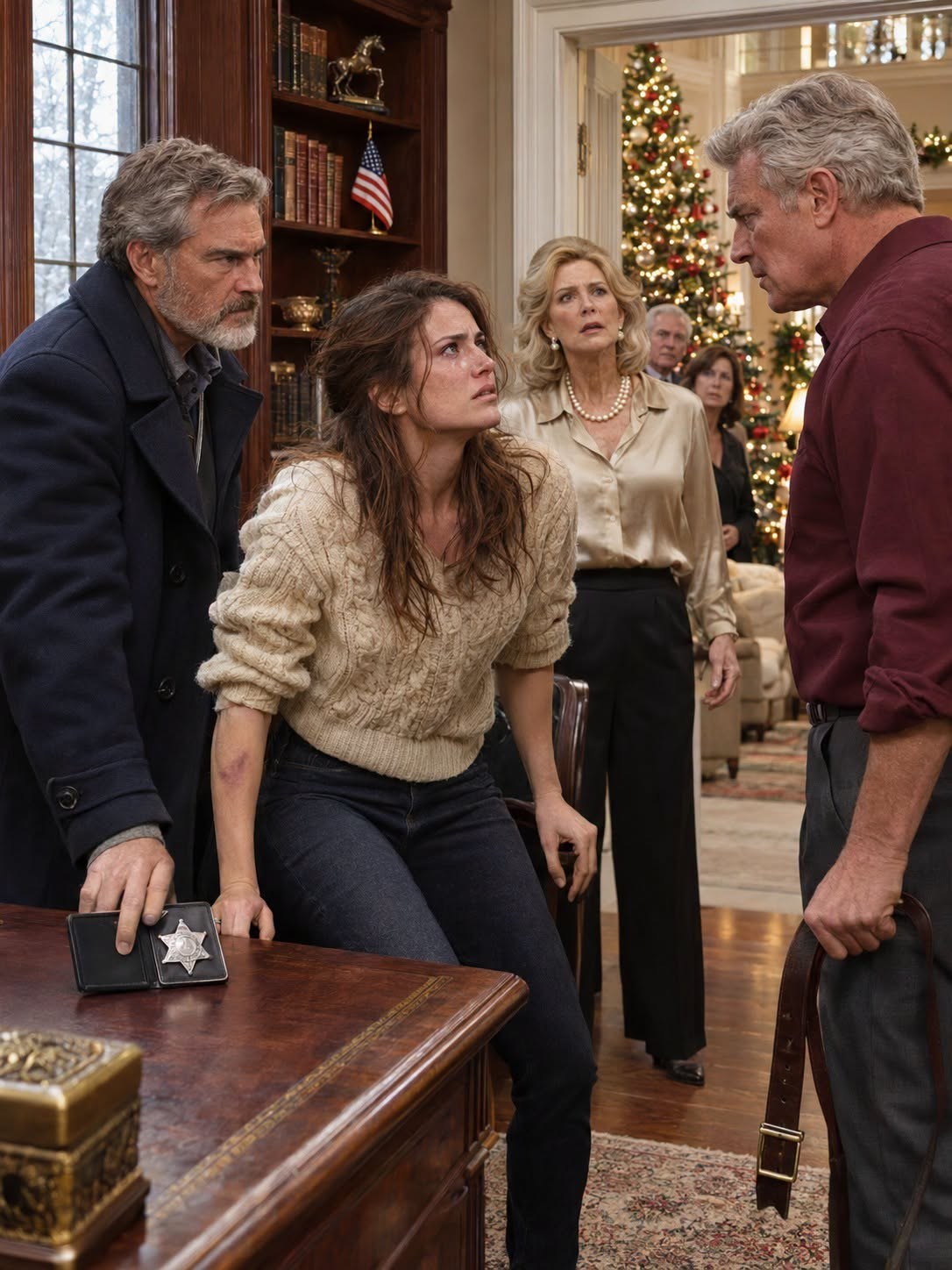
DAD STRUCK ME WITH HIS LEATHER BELT IN THE FRONT OF THE CHRISTMAS TREE. MOM WATCHED AND SAID, “YOU’LL ALWAYS BE OUR BIGGEST DISAPPOINTMENT.” I WAS 32, BUT THEY STILL TREATED ME LIKE A HELPLESS CHILD. THEN MY UNCLE WALKED IN, SAW MY BRUISES, AND PLACED HIS POLICE BADGE ON THE TABLE.
dad struck me with his leather belt in the front of the christmas tree. mom watched and said, “you’ll always be our biggest disappointment.” i was 32, but they still treated me like a helpless child. then my uncle walked in, saw my bruises, and placed his police badge on the table.
Dad struck me with his leather belt in front of the Christmas tree. Mom watched and said, “You will always be our biggest disappointment.” I was 32, but they still treated me like a helpless child. Then my uncle walked in, saw my bruises, and placed his police badge on the table.
Thank you for watching the video. Before I take you back there, do me one small favor. Take a second to like and subscribe, and tell me in the comments where you’re watching from and what time it is where you are. It helps more than you know.
My name is Mave. I am 32 years old, and I work as a supply chain operations manager for one of the largest retail corporations in the country. My days are spent negotiating multimillion-dollar contracts, managing teams of aggressive executives, and making split-second decisions that impact thousands of employees.
In the boardroom, I am known as a ruthless, pragmatic problem solver. People respect me. Some even fear me. I wear tailored suits, drive a reliable car, and live a quiet, highly organized life in the city.
But none of that mattered the moment I stepped foot into my parents’ house. The moment the front door closed behind me, the corporate executive vanished, and I was instantly reduced to the scapegoat, the invisible daughter, the family punching bag.
How does a successful, independent woman in her thirties end up cowering on a hardwood floor while her father whips her with a belt?
People who have never lived inside a toxic family dynamic always ask that question. They think leaving is as simple as walking out the door and never looking back. They do not understand the invisible strings that narcissistic parents weave into your brain from the time you are a toddler. They do not understand the profound, paralyzing guilt that is weaponized against you.
It is a slow poison. It drips into your system year after year until you believe you truly deserve the abuse.
My father, Alden, was a man obsessed with control. He had been a mid-level manager at a logistics firm in his prime, a man who desperately craved power but lacked the talent and charisma to actually achieve it. Because he failed to conquer the corporate world, he decided to build a dictatorship in his own living room.
His fragile ego demanded total obedience. Every conversation was a lecture. Every disagreement was a personal attack on his authority. And I was his favorite target.
My mother, Rowena, was his enforcer. She was a woman who cared more about the appearance of our family than the actual souls living inside it. She fed off my father’s approval. Whenever his anger flared, she would eagerly throw me to the wolves to save herself and maintain the illusion of a perfect household.
She would stand by, watching him tear me apart emotionally and eventually physically, just nodding and adding her own venomous insults.
I spent my entire twenties trying to outrun them. I moved into a tiny, run-down apartment in the city just to have some physical distance. I told them I was barely scraping by as a low-level clerk. I hid my promotions. I hid my bonuses. I hid the fact that my investment portfolio had steadily grown to over $2.8 million.
I knew that if they ever discovered my wealth, they would drain me dry. They already treated me like a broken ATM, constantly demanding cash to fund their endless string of bad decisions.
I played the part of the struggling, unremarkable daughter because being a failure in their eyes was safer than being a resource.
But pretending to be a failure comes with a heavy price. It meant enduring their constant humiliation. It meant sitting at family dinners while they mocked my cheap clothes, unaware that I could buy their entire house with a single wire transfer.
I thought I could handle the humiliation. I thought I could just grit my teeth, play the part, and escape back to my real life.
I was wrong.
The control they wanted was not just financial or emotional. It was total. My father needed to know he could break me.
The nightmare that culminated on that Christmas Eve did not happen overnight. It was the boiling point of a lifetime of resentment. For weeks leading up to the holidays, the tension in my chest had been suffocating.
I had panic attacks in my office bathroom just thinking about driving back to their suburban house. I could hear my father’s booming voice in my head, criticizing my posture, my hair, my lack of a husband. I could see my mother’s cold, calculating eyes staring at me with pure disgust.
They had always hated my independence, even the fake, struggling version of it. They hated that I did not live under their roof anymore. To Alden, a daughter living outside his direct command was a daily insult.
He would call me late at night, his speech slurred from too much scotch, demanding I come over to fix his computer or clean out the garage. If I said I had to work, the screaming would start. He would call me a selfish brat, an ungrateful wretch who abandoned the family.
And Rowena would always back him up. She would leave me voicemails telling me that I was tearing the family apart with my stubbornness. She would say things like, “Your father works so hard, and you treat him like garbage. You are nothing without us, Mave.”
Nothing.
The psychological warfare was exhausting, but the physical intimidation was something that had slowly crept back into our dynamic. When I was a teenager, a slap across the face or a shove against the wall was standard discipline in our house.
As I got older and moved out, the physical violence paused, replaced by emotional terrorism. But recently, as my father aged and his sense of relevance faded, his temper had become volatile, unpredictable, and dangerous.
I should have cut ties. My friends told me to block their numbers. My therapist told me I was trauma-bonded to my abusers. But logic fails when you are staring down the barrel of a family dynamic that has shaped your entire reality.
I still held on to a tiny, pathetic shred of hope that maybe, just maybe, if I played the game perfectly, they would look at me with genuine warmth.
I was a corporate shark during the day, but a desperate, broken little girl at night.
The trap was set long before the holidays arrived. The family drama was escalating, and the demands were becoming more unhinged. I thought I could survive one more Christmas dinner. I thought I could swallow my pride, eat their dry turkey, endure the insults, and drive back to my safe haven.
But I had no idea what they were actually planning for me. I had no idea that my father had decided it was time to put me back in my place permanently. And I certainly did not know that by the end of the night, blood would be spilled on the living room rug.
What could possibly drive a father to wrap a leather belt around his hand and beat his adult daughter to the ground while the holiday lights twinkled behind him?
To understand the sheer lunacy of my parents’ behavior, you have to understand the golden child of the family: my younger sister, Sloan.
Sloan was 28 years old, with perfectly highlighted hair, manicured nails, and a wardrobe that looked like it belonged to a reality television star. If I was the family punching bag, Sloan was the family trophy.
From the moment she was born, the rules in our house split into two distinct realities. There was my reality, built on harsh expectations, constant criticism, and zero support. And there was Sloan’s reality, built on endless praise, expensive gifts, and a total lack of accountability.
Growing up, I worked part-time at a grocery store to pay for my own school supplies and thrift-store clothes. Meanwhile, my father would proudly hand Sloan his credit card to go shopping with her friends.
When I graduated from high school with honors, my mother handed me a card with a $20 bill and told me I needed to figure out my own college tuition because they were not going to waste money on a degree I would probably fail at anyway.
Two years later, when Sloan barely graduated with a C average, they threw her a massive catered party and bought her a brand-new sedan.
The contrast was sickening, but if I ever dared to point it out, the gaslighting was immediate.
“You are just jealous,” my mother would sneer, sipping her wine. “Sloan knows how to respect her parents. You have always been difficult. You owe us your life, Mave, and all you do is complain.”
As we entered adulthood, the gap between us only widened, but in a twisted, hidden way.
Sloan had never held a real job for more than three months. She claimed she was an aspiring lifestyle influencer. Her Instagram was a curated feed of luxury brunches, designer handbags, and exotic vacations. She projected the image of a wealthy, successful socialite.
But the reality was a financial horror story.
Sloan was drowning in debt. She had maxed out every credit card she could get her hands on, accumulating over $75,000 in high-interest debt. She had no income, no savings, and no concept of how the real world worked.
And who do you think funded this delusion?
My parents.
Alden and Rowena were terrified of the neighborhood finding out that their perfect golden child was actually a deadbeat. They drained their own retirement accounts to pay her rent. They bought her groceries. They paid her car lease. They sacrificed their own financial stability to keep Sloan’s fake internet life afloat.
And when their money started running out, they turned their sights on me.
Even though they thought I was just a low-level employee barely making rent, they still demanded my money. They felt entitled to every penny I earned.
The phone calls were relentless.
“Your sister is in a tough spot,” my father would bark over the phone. “She needs $2,000 for her car repair. Send it by tonight.”
When I would refuse, citing my own fake struggles with rent, the verbal abuse would rain down.
“You selfish little witch!” Rowena would scream in the background. “Your sister is trying to build a brand. You do nothing but push papers at some miserable desk. Family helps family.”
They never asked for a loan. They demanded tribute.
For a long time, I would occasionally send a few hundred just to get them to stop calling and harassing me at my office. It was a tax I paid for temporary peace.
But as Sloan’s spending spiraled out of control, their demands became more frequent and more aggressive. They stopped asking for a few hundred and started demanding thousands.
The irony was almost suffocating. Here I was, managing a massive supply chain network, earning a massive salary, sitting on a portfolio of $2.8 million, and getting screamed at for not giving up my grocery money to a sister who was buying $400 shoes she could not afford.
My parents were literally driving themselves into bankruptcy to maintain a facade, and they wanted to drag me down into the financial grave with them.
I watched their desperation grow month by month. Alden’s pride was taking a massive hit. The man who needed to feel like a king was secretly drowning in debt collections and past-due notices. His stress translated directly into rage.
And since he could never be angry at Sloan, all that rage was funneled directly at me.
Every family gathering turned into an interrogation about my finances. They would inspect my shoes, my handbag, the keys to my used car. They were looking for any sign of hidden wealth, any spare cash they could extract to feed the golden child.
I learned to dress down, to complain about the cost of electricity, to shrink myself into a pathetic little ball of poverty just to survive Sunday dinners.
But hiding my success was tearing me apart inside. I wanted to scream the truth at them. I wanted to throw my bank statements in their faces and show them that the daughter they treated like trash was the only one who had actually made something of her life.
I wanted to see the look on Sloan’s smug, entitled face when she realized her loser sister could buy her entire life ten times over.
But I held back.
I knew that if I revealed my hand too early, they would not respect me. They would just feel entitled to it. They would sue me, harass my employers, or show up at my apartment crying and screaming until I paid off Sloan’s $75,000 debt.
I needed a better plan. I needed to build a fortress around myself before I ever let them see the truth.
The resentment in our family was a powder keg waiting for a spark. Alden was losing his grip on his finances. Rowena was losing her mind trying to keep up appearances. And Sloan was oblivious, partying on a sinking ship.
They were desperate, and desperate people do dangerous things.
I just did not realize how desperate they had become until the week before Christmas.
I thought they just wanted another handout. I thought they were going to ask for a few thousand to cover Sloan’s holiday shopping. I was prepared to say no, endure the yelling, and go home.
But the phone call I received that Tuesday changed everything.
It shifted the dynamic from a toxic family annoyance to a full-blown declaration of war. My father did not just want a handout anymore. He wanted my blood. He wanted to strip me of everything I had, and he was willing to use violence to get it.
What exactly did he say that forced me to finally stop crying and start fighting back?
It was a Tuesday evening, exactly one week before Christmas. I was sitting in my corner office reviewing a quarterly logistics report, enjoying the quiet hum of the building after most of the staff had gone home.
My desk phone was forwarded to my mobile, and when it vibrated against the glass table, I saw my father’s name flash on the screen.
My stomach instantly tied itself into a familiar, painful knot. I let it ring three times, taking a deep breath to steady my heart rate before pressing Answer.
“Hello, Dad,” I said, keeping my voice neutral and small, playing the role he expected.
“Listen to me very carefully, Mave.”
Alden’s voice sparked through the speaker. There was no greeting. His tone was sharp, erratic, and laced with a terrifying kind of panic I had never heard before.
“You are coming to the Christmas Eve dinner this year, and you are bringing $50,000.”
The office around me seemed to go entirely silent. I froze, my pen hovering over my notepad.
“$50,000?” I repeated, my voice barely a whisper. “Dad, what are you talking about? I do not have that kind of money. I barely have enough to cover my heating bill this month.”
“Do not lie to me!” he roared, the sound distorting the phone speaker. “I know you have retirement accounts. I know you have a credit line. You will take out a loan. You will cash out your meager little 401(k). You will do whatever it takes. Sloan is in trouble. The creditors are threatening to sue her, and they are going to garnish her wages. It will ruin her brand.”
I closed my eyes, pressing my fingers to my temples.
“Dad, Sloan does not have wages to garnish. She does not have a job. And I cannot take out a loan for $50,000. That is insane.”
“You selfish, ungrateful—”
It was my mother. She was on another extension, her voice shrill and hysterical.
“Your sister is crying in her room. Her life is falling apart, and you are sitting there hoarding your pennies. You owe this family. We raised you. We fed you. You will bring that money on Christmas Eve, or your father will make you regret the day you were born.”
“I am not asking, Mave,” Alden interrupted, his voice dropping to a low, menacing growl that sent ice water through my veins. “If you show up empty-handed, I will punish you. I will show you exactly what happens to a disobedient child. You bring the money, and you sign it over to Sloan, or else.”
He hung up. The line went dead.
I sat in the glow of my computer monitor for a long time. My hands were shaking, but to my own surprise, there were no tears in my eyes.
The little girl who used to cry in her closet was gone. The corporate executive had taken the wheel.
$50,000.
It was a drop in the bucket of my actual net worth, but to them, it was a massive fortune.
Why were they so panicked? Sloan’s debts were bad, but creditors do not usually cause a narcissistic collapse of this magnitude unless there was something bigger at stake.
I picked up my phone and dialed Callum.
Callum was not just my corporate lawyer. He was a shark who specialized in aggressive asset management and debt restructuring. I had kept him on retainer for years to protect my investments.
“Callum, it’s Mave,” I said, my voice cold and steady. “I need you to run a deep financial background check on my parents, Alden and Rowena. Pull their credit history. Check the public property records. I need to know exactly what kind of financial trouble they are in. I need it tonight.”
“Give me an hour,” Callum replied, asking no questions.
Forty-five minutes later, my email chimed. Callum had sent a secured file. I opened the PDF and began scrolling through the data. Within minutes, the entire pathetic, horrifying puzzle snapped into place.
My parents had not just drained their savings for Sloan. Two years ago, they had taken out a massive second mortgage on their house—the house I grew up in, the house they paraded around as proof of their success.
They had handed all that cash to Sloan.
But with Alden’s forced early retirement and Sloan’s continued spending, they had defaulted on the payments.
The bank was not just threatening them. The bank had initiated foreclosure proceedings. The public notice had been filed. They were 30 days away from being evicted and losing everything.
They were demanding the $50,000 from me not to save Sloan’s fake brand, but to pay the arrears and stop the foreclosure. They were trying to bleed me dry to save their own skin, and they were using Sloan as the excuse.
The realization was sickening, but it was also incredibly empowering.
They were broke. They were entirely powerless in the real world. Their only remaining source of power was the psychological grip they thought they had over me.
I picked up the phone and called back.
“Did you see the foreclosure notice?” Callum asked.
“I saw it,” I said, staring at the screen. “Callum, who holds the debt? Which bank?”
“It is a midsized regional lender. They bundle these distressed mortgages and sell them off to private equity firms at a discount all the time.”
A cold, calculating smile spread across my face. It was a smile my competitors knew well, but my family had never seen.
“Callum, I want to buy that debt.”
There was a brief pause on the line.
“Mave, you want to buy your parents’ distressed mortgage? You are talking about purchasing a nonperforming asset just to—”
“I want to own the paper,” I interrupted, my voice hard. “I want to buy the loan from the bank. Use my LLC. Do not put my name on the initial contact. Offer them a cash settlement to take the bad debt off their books. Pay a premium if you have to. I have the liquidity. I want the deed and the mortgage note in my hands before Christmas Eve.”
Callum chuckled softly.
“You understand that if you own the debt and they are in default, you effectively become the bank. You hold the right to foreclose on them.”
“I understand entirely,” I said. “Just get it done.”
Over the next six days, my life was a blur of legal paperwork and wire transfers. Callum moved with lethal efficiency. The regional bank was thrilled to offload a messy residential foreclosure for a lump sum of cash.
By December 23rd, the ink was dry. My private holding company was now the sole owner of my parents’ mortgage.
I printed the documents, placed them in a sleek black folder, and slid it into my briefcase.
They wanted $50,000. They threatened to punish me if I did not submit to their control. They thought I was a weak, pathetic child they could bully into submission to save their sinking ship.
They had no idea that the ship had already sunk, and I was the one holding the deed to the wreckage.
When Christmas Eve arrived, the air in the city was bitterly cold. I put on the cheapest, most worn-out sweater I owned. I drove my beat-up sedan instead of my usual car. I practiced my timid, nervous posture in the rearview mirror.
I was walking into the lion’s den, knowing full well that Alden was planning violence if I did not hand over a check.
I knew it was going to be ugly. I knew there would be a confrontation. But I was ready.
I patted the black folder sitting on the passenger seat.
The game was over.
I was going to let them push me to the edge. I was going to let them show their true monstrous faces, and then I was going to drop the anvil.
How far would my father go to break me in front of the Christmas tree? And how would he react when the daughter he despised became the master of his fate?
The drive to my parents’ house on Christmas Eve was a journey through a frozen, picturesque nightmare. The roads were slick with black ice, and the heater in my old, beat-up sedan was struggling to push out anything more than a lukewarm breeze.
I had specifically chosen to drive the worst car I owned. Back at my luxury apartment building in the city, my sleek, custom-ordered SUV was safely parked in its heated garage.
But tonight, I needed to play a role. I needed to look like the struggling, desperate daughter they always told me I was.
I wore a faded gray wool sweater that had started to pill at the elbows, a pair of worn-out jeans, and a scarf that had seen better days.
In my leather tote bag on the passenger seat, hidden beneath a cheap box of store-bought cookies I brought as a contribution to the dinner, lay the sleek black folder.
Inside that folder was the deed to their house and the mortgage note that proved my holding company was their sole creditor.
My heartbeat was a steady, rhythmic drum against my ribs. The anticipation was a strange mix of terror and adrenaline.
When I finally turned onto their street, the contrast between my reality and their delusion became painfully obvious.
The neighborhood was an enclave of upper-middle-class houses, the kind of place where people competed to see who could waste the most electricity on holiday decorations.
My parents’ house was the most obnoxious of them all. Every inch of the roofline was dripping with icicle lights. Two massive glowing reindeer stood on the front lawn, flanked by a six-foot inflatable Santa.
It was a brilliant, blinding display of wealth. It was also entirely funded by debt.
Looking at those lights, I felt a sick twist in my stomach, knowing that the bank had already filed foreclosure papers. They were putting on a show for neighbors who would soon be watching them pack their belongings into cardboard boxes on the curb.
I parked my sputtering car at the very end of the driveway, far behind Sloan’s spotless white luxury crossover SUV, the one my parents paid the lease on every month.
I grabbed my bag, took a deep breath of the freezing air, and walked up to the heavy oak front door.
Before I even knocked, the door swung open, revealing my aunt Martha.
She was my mother’s sister, the chief of the flying monkeys, a woman whose entire existence revolved around gossiping and measuring other people’s failures.
She looked me up and down, her eyes pausing on the frayed cuffs of my sweater.
“Oh, Mave,” she sighed, her voice dripping with that toxic, fake pity I despised. “You made it. We were starting to wonder if your little car broke down again. Come in, come in. The cold is not doing your skin any favors.”
I forced a polite, tight smile and stepped into the grand foyer.
The house smelled of roasted garlic, expensive pine candles, and expensive perfume. The living room was packed with relatives—aunts, uncles, and cousins who all subscribed to the Alden and Rowena illusion.
They were drinking champagne from crystal flutes and laughing loudly, celebrating a prosperity that did not actually exist.
And then, descending the curved staircase like she was starring in her own movie, came Sloan.
She was wearing a sparkling emerald-green designer dress that I knew for a fact cost at least $2,000. Her hair was styled into perfect, effortless waves, and her wrists glittered with gold bracelets.
She held a glass of wine in one hand and her phone in the other, no doubt recording content for her fake influencer lifestyle.
When she saw me standing by the door in my cheap sweater, a cruel, satisfied smirk spread across her face. She walked over, the scent of her overpowering floral perfume hitting me before she even spoke.
“Mave,” Sloan said, dragging out my name like it was a chore to speak it. “You are 32 years old. You cannot keep dressing like a homeless person every time you come to a family event. It is embarrassing for Mom and Dad.”
The rage flared in my chest, hot and sharp, but I swallowed it down.
I looked at the diamond earrings dangling from her ears. I thought about the $75,000 in credit card debt Callum had uncovered. I thought about how she was standing in a house that I technically owned.
“I am just trying to stay warm, Sloan,” I said softly, keeping my eyes cast down, playing the part of the timid failure. “Money is tight right now.”
Sloan rolled her eyes dramatically, looking over her shoulder to make sure our cousins were watching.
“Money is always tight for you because you have no ambition. You just settle for mediocrity, but whatever. Just put your cheap cookies in the kitchen and try not to ruin the aesthetic tonight. I need to take some photos by the tree.”
She turned on her expensive heels and walked away, immediately raising her phone to film a video for her followers, laughing brightly for the camera.
I walked into the kitchen, placing the cookies on the granite island. My mother, Rowena, was standing by the double oven, wearing a silk blouse and a pearl necklace.
When she saw me, her face tightened into a scowl.
There was no greeting.
No hug.
“Did you bring what your father asked for?” she whispered harshly, stepping close to me so the guests in the living room could not hear.
Her eyes were wide, frantic, and filled with a desperate kind of malice.
“I cannot, Mom,” I whispered back, letting a slight tremble enter my voice. “I do not have it. You know I do not.”
Rowena’s face flushed a deep, ugly red.
“You useless, selfish girl,” she hissed, grabbing my upper arm and squeezing hard, her manicured nails digging through my sweater. “Your father is going to lose his mind. You better figure out a way to fix this before dinner is over. Don’t you dare ruin this night for your sister.”
She shoved my arm away and turned back to the oven, plastering a fake, glowing smile onto her face as Aunt Martha walked into the kitchen.
For the next two hours, I endured the torture of the holiday dinner. I sat at the far end of the long mahogany table, pushing food around my plate while the family took turns praising Sloan.
They toasted to her expanding social media brand. They complimented her dress. They asked my father for investment advice, and Alden sat at the head of the table, holding a glass of scotch, expanding his chest, and spouting financial nonsense while secretly knowing he was facing total ruin.
Every few minutes, Alden’s dark, furious eyes would shoot down the table and lock onto mine. It was a predatory stare.
He was waiting.
He was letting the audience have their fun, but he was counting down the minutes until he could corner me.
I kept my hand resting on my tote bag the entire time. The black folder was right there. I could have pulled it out over the roasted turkey. I could have thrown the foreclosure notice into the mashed potatoes and watched the entire illusion shatter into a million pieces.
I could have watched Aunt Martha choke on her wine, but the timing was not right.
I needed Alden to cross the line. I needed him to show his true colors without the mask, without the audience. I needed him to commit the ultimate sins so that when I dropped the anvil, there would be no going back, no forgiveness, and no mercy.
As the dessert plates were cleared and the relatives moved into the living room to exchange gifts, the moment finally arrived.
Alden stood up, buttoned his suit jacket, and pointed a thick finger at me.
“Mave.” His voice boomed over the holiday music playing in the background. “Join me in my study. We have some family business to discuss. Rowena, come with us.”
The chatter in the room died down for a second. Sloan smirked from the sofa, clearly knowing what this was about.
She thought I was about to get bullied into handing over my life savings to fund her fake life.
I stood up, gripping the handles of my tote bag. My legs felt heavy, but my mind was sharper than it had ever been.
I followed my parents down the long hallway, away from the laughter and the lights, toward the dark wood-paneled room at the back of the house.
The trap was springing shut, but they did not know who the actual prey was.
Alden’s study was a monument to his fragile ego. The walls were lined with dark oak bookshelves holding thick, unread encyclopedias.
Behind his massive mahogany desk hung a series of framed, meaningless corporate awards from two decades ago, back when he still believed he was destined for greatness.
The room smelled of old leather and stale cigar smoke.
I walked in and stood awkwardly in the center of the Persian rug. Rowena stepped in right behind me, pushing the heavy door shut until the latch clicked into place.
The festive sounds of the Christmas party vanished, replaced by a thick, suffocating silence.
Alden walked around his desk and did not sit down. He leaned over the polished wood, resting his knuckles on the surface, his broad shoulders hunched like a bull preparing to charge.
His face was flushed from the scotch, and the veins in his neck were visibly pulsing.
“I am not going to waste time playing games with you, Mave,” he began, his voice a low, vibrating growl. “Where is the check? Where is the $50,000?”
I clutched my bag to my chest.
“Dad, I told you on the phone. I do not have $50,000. I work in a cubicle. I pay rent. I barely have enough in my savings to cover an emergency. Even if I wanted to, I cannot give you what I do not have.”
“Liar!”
Alden slammed his fist onto the desk, the sound echoing like a gunshot in the small room. A crystal paperweight rattled against the wood.
“Do you think I am stupid? Do you think I do not know how to run a background check on my own daughter? You have a 401(k). You have a decent credit score. I know you have access to credit lines.”
He reached into a drawer and pulled out a stack of papers, tossing them violently across the desk. They slid and scattered over the edge, falling onto the rug at my feet.
“These are loan application forms,” Alden sneered, his eyes wild with desperation, “and a document granting me power of attorney over your financial accounts. You are going to sign them right now. I will take out the loan in your name. I will handle the transfer. You will not have to do a thing except sign your name on the dotted line.”
I stared at the papers on the floor.
It was financial fraud. It was extortion. They were literally trying to ruin my life, destroy my credit, and steal my future just to pay off a mortgage they could not afford, all while pretending it was to save Sloan.
A cold, hard knot of defiance solidified in my chest. The terrified little girl vanished entirely.
“No,” I said.
The word hung in the air. It was a simple two-letter word, but in that room, it was a declaration of war.
Rowena gasped, stepping forward.
“How dare you speak to your father that way? You ungrateful little brat. Sign the papers. Your sister is going to be ruined because of your selfishness.”
“I am not signing anything,” I said, my voice steady, my eyes locking directly onto Alden’s. “I am not taking out a loan. I am not giving you power of attorney. I am not giving you a single dime to fix Sloan’s mistakes or yours.”
Alden froze. His eyes widened, not in fear, but in profound, disbelief-fueled rage.
No one ever told him no. No one ever defied him in his own house, especially not the daughter he viewed as his property.
The mask of the civilized, sophisticated patriarch shattered completely, revealing the violent, unstable monster hiding underneath.
“What did you just say to me?” he whispered, his voice shaking with fury.
“I said no,” I repeated, standing taller. “The answer is no. Now I am going to leave.”
I turned toward the door, reaching for the brass handle.
Before my fingers could touch the metal, I heard the sharp metallic click of the deadbolt.
Rowena had turned the lock.
She stood in front of the door, her arms crossed over her silk blouse, her eyes cold and dead.
“You are not going anywhere until you fix this,” she hissed.
A sudden rush of adrenaline flooded my system. I spun around just in time to see Alden marching out from behind the desk.
His face was twisted into an unrecognizable grimace of pure hatred. He was breathing heavily through his nose.
His hands moved to his waist, and with a swift, practiced motion, he unbuckled his thick leather belt.
The sound of the leather sliding through the belt loops sent a visceral shock wave of terror through my brain.
It was a sound I had not heard in fifteen years. It was the soundtrack of my childhood nightmares.
“Dad, stop,” I said, stepping back, my voice finally betraying my fear. “Do not do this. You are out of your mind.”
“I am going to teach you respect,” Alden snarled, wrapping the buckle end of the belt firmly around his right hand, leaving the heavy leather strap hanging loose. “I am going to beat the defiance out of you just like I used to. You think you are an adult? You think you can walk into my house and deny me what I am owed?”
He lunged.
I tried to raise my arms to protect my face, but he was too fast and too strong.
The first strike came with blinding speed. The thick leather cracked against my left shoulder with a sickening snap. The pain was explosive. It radiated down my arm and up into my neck, burning like fire.
I screamed, stumbling backward and crashing into a heavy wooden bookshelf. Several books tumbled down, hitting the floor around me.
“Sign the papers!” Alden roared, stepping closer, his eyes completely devoid of sanity.
He swung again. This time, the leather strap wrapped around my ribs. The force of the blow knocked the breath entirely out of my lungs.
I collapsed onto my knees on the Persian rug, gasping for air, the room spinning violently around me.
“Stop, please,” I begged.
My corporate armor completely shattered. I was just a child again, trapped in a room with a monster.
He did not stop.
The belt rained down. It struck my back, my arms, my thighs. I curled into a tight ball, trying to shield my head and stomach, my hands clutching my tote bag like a shield.
The sound of the leather cracking against my clothes and skin was deafening, mixed with the sound of his heavy, frantic breathing.
Every strike felt like a metal rod hitting my bones.
I tasted blood in my mouth. I had bitten the inside of my cheek when I fell. Tears streamed down my face, blurring my vision.
Through the haze of pain and terror, I looked up toward the door.
Rowena was still standing there.
She was not screaming. She was not trying to stop him. She was watching with a sickeningly calm expression.
“Mom,” I choked out, reaching a trembling, bruised hand toward her. “Help me, please.”
Rowena looked down at me, her face a mask of absolute disdain. She tilted her head slightly, her pearl necklace catching the dim light of the desk lamp.
“You will always be our biggest disappointment,” she said, her voice smooth and chillingly cruel. “You deserve every bit of this. Be grateful he is trying to fix you.”
Those words hurt more than the belt. They sliced through my soul, severing the final, pathetic thread of hope I had been clinging to for 32 years.
They were not my parents.
They were parasites. They were sadists.
Alden raised the belt high above his head, preparing to bring it down across my face.
I squeezed my eyes shut, bracing for the impact, knowing my cheekbone was about to shatter.
But the—
strike never landed.
Instead, a deafening crash shook the entire room.
The sound was explosive, like a cannon firing inside the house. The heavy oak door of the study shuddered violently in its frame.
Rowena shrieked and jumped backward, stumbling away from the door lock.
Alden froze, the belt still raised above his head. He snapped his head toward the door, his chest heaving, his face slick with sweat.
Another massive thud echoed, followed by the sickening crunch of splitting wood.
The brass deadbolt tore through the doorframe, sending splinters flying across the Persian rug. The door flew open, crashing against the interior wall with enough force to crack the plaster.
Standing in the doorway, filling the entire frame with his massive, imposing presence, was my uncle Gideon.
Gideon was Alden’s younger brother, but they could not have been more different.
While Alden was a failed corporate climber obsessed with appearances, Gideon was a hardened 20-year veteran of the city police department, currently serving as a lieutenant in the violent crimes division.
He was a man built like a freight train, with a thick beard, sharp gray eyes, and a demeanor that commanded instant, terrifying respect.
He was not invited to the Christmas party. Alden hated Gideon because Gideon saw right through the fake wealth and the narcissistic lies. Gideon had always been the black sheep in my parents’ eyes, precisely because he refused to play their games.
I later learned he had just stopped by on his way home from a shift to drop off a small gift for me, knowing I would be forced to attend. He had walked through the unlocked front door just in time to hear my screams echoing down the hallway over the sound of the Christmas carols.
Gideon stood in the ruined doorway, wearing a heavy, dark winter coat over his civilian clothes.
His eyes swept the room, taking in the chaotic scene with the rapid, calculating precision of a seasoned detective.
He saw the scattered papers on the floor. He saw Rowena cowering near the wall. He saw Alden, red-faced and sweating, clutching a heavy leather belt.
And then his eyes fell on me.
I was curled on the floor in my cheap, torn sweater. My hair was disheveled. My face was pale and stained with tears. A thin line of blood was dripping from the corner of my mouth where I had bitten my cheek.
A dark, angry purple welt was already swelling across my left forearm where I had tried to block a strike.
The silence in the room was absolute, heavy, and terrifying. The air felt like it had been sucked out of the space.
Gideon did not yell. He did not rush forward.
The calmness he displayed was infinitely more terrifying than Alden’s screaming rage. It was the lethal, focused calm of a predator cornering its prey.
He took one slow, deliberate step into the study. His heavy boots crunched loudly over the splintered wood from the broken doorframe.
Alden panicked.
The illusion of his supreme authority was crumbling by the second. He lowered the belt slightly, trying to assemble his corporate, authoritative mask back onto his sweating face.
“Gideon,” Alden started, his voice cracking as he tried to sound reasonable and firmly in control. “What the hell are you doing breaking down my door? This is a private family matter. You need to leave right now.”
Gideon did not blink. He kept his eyes locked on the leather belt wrapped around his brother’s fist.
“Mave is having a hysterical episode,” Alden continued, speaking faster, pointing the loose end of the belt at me like an accusatory finger. “She came in here screaming and throwing things. She is mentally unstable. I had to restrain her for her own safety. It is a family discipline issue.”
Rowena, desperately trying to save the narrative, nodded frantically from the corner.
“It is true, Gideon. She attacked her father. She is completely out of control. We were just trying to calm her down.”
I stayed on the floor, clutching my tote bag, watching the scene unfold. I did not say a word. I did not need to defend myself.
I knew Gideon. I knew he was the only person in this family who possessed an actual moral compass.
Gideon slowly reached inside the breast pocket of his heavy winter coat.
Alden flinched, taking a step backward, his eyes darting to Gideon’s hand.
But Gideon did not pull out a weapon.
He pulled out a worn black leather wallet.
Without breaking eye contact with Alden, Gideon flicked the wallet open with his thumb and walked slowly toward the mahogany desk.
He raised his hand and dropped the wallet onto the polished wood.
Clack.
The heavy silver six-pointed star of a police lieutenant gleamed under the desk lamp. It sat right on top of the scattered, fraudulent loan papers Alden had tried to force me to sign.
The badge was a symbol of reality crashing into Alden’s delusion. It meant the rules of the house no longer applied.
The dictator had just been stripped of his power.
Gideon leaned forward, resting both hands flat on the desk, bringing his face dangerously close to his brother’s.
When he finally spoke, his voice was a low, gravelly rumble that vibrated through the floorboards.
“You have exactly five seconds to put that belt on this desk, Alden,” Gideon said, spacing every word out with lethal intent. “If you are still holding it when I get to one, I am going to put you through that glass window, and then I am going to read you your rights while you bleed on your fake lawn.”
Alden swallowed hard, his Adam’s apple bobbing. The color drained entirely from his face, leaving him a pasty, sickly gray.
He looked at the heavy silver badge, then at Gideon’s dead, unwavering eyes.
The realization hit him that he was no longer talking to his younger brother. He was talking to a high-ranking officer of the law who had just caught him committing a felony assault.
“Five,” Gideon counted, his voice echoing in the quiet room.
Alden’s hands began to shake.
“Four.”
Rowena let out a pathetic, stifled whimper, pressing her hands over her mouth.
“Three.”
Alden slowly unwrapped the leather from around his knuckles. The belt slipped from his trembling fingers and slapped onto the mahogany desk, landing right next to the silver badge.
Alden took two steps back, raising his hands in a gesture of surrender, his chest heaving.
“Okay,” he breathed out, sounding small and pathetic. “Okay, Gideon, just let us talk about this. Let us keep this in the family.”
Gideon ignored him.
He turned away from the desk, walked over to where I was kneeling on the rug, and knelt down beside me. His massive frame blocked out the sight of my parents.
The look in his gray eyes softened from lethal fury to deep, protective concern.
“Mave,” he said gently, reaching out to lightly touch my uninjured shoulder. “Are you broken anywhere? Can you stand?”
I looked at my uncle, the man who had just blown the doors off my prison.
The physical pain from the belt strikes was agonizing, but the psychological relief was overwhelming.
The worst had happened, and I was still breathing.
They had tried to break me, but all they had done was hand me the exact weapon I needed to destroy them.
I took a deep, shaky breath, letting the cold air fill my lungs. I tasted the copper tang of blood, but I also tasted victory.
“I can stand,” I whispered, my voice growing stronger.
I gripped the handles of my tote bag, using Gideon’s arm to pull myself up from the floor.
My ribs screamed in protest, and my legs felt weak, but I stood up straight. I brushed the dust off my frayed sweater. I wiped the blood from my mouth with the back of my hand.
I looked past Gideon’s shoulder at my father, who was cowering behind his desk, and my mother, who was shrinking into the corner.
They looked pathetic. They looked like cornered rats.
The physical abuse was over. The badge on the table had stopped the violence.
But the night was far from finished.
They thought the worst thing that could happen to them was getting arrested by Gideon.
They were wrong.
The police were just the appetizer. The main course was inside the black folder in my hands, and I was about to serve it cold.
The silence in the ruined study was so absolute that I could hear the faint, festive sound of a Christmas choir playing from the speakers in the distant living room. It was a bizarre, surreal soundtrack to the absolute destruction of my father’s empire.
Uncle Gideon did not say another word to Alden. He did not need to. The heavy silver badge sitting on the mahogany desk had already done the talking.
Gideon reached around to the back of his belt under his heavy winter coat and produced a pair of solid steel handcuffs. The metallic clinking sound they made as he pulled them free seemed to break the spell that had paralyzed the room.
Alden’s eyes widened in sheer, unadulterated panic. The corporate dictator, the man who had just seconds ago been swinging a leather belt with the fury of a tyrant, suddenly shrank into a pathetic, terrified old man.
“Gideon, no,” Alden stammered, raising his hands defensively, backing up until his spine hit the oak bookshelves. “You cannot do this. I am your brother. You are not on duty. You cannot just come into my house and arrest me. I was disciplining my child.”
“Your child is 32 years old, Alden,” Gideon said, his voice a low, terrifying rumble as he closed the distance between them in two massive strides. “And you just committed aggravated assault with a weapon. Put your hands behind your back.”
“It was a mistake,” Alden pleaded, his voice cracking into a high-pitched whine.
He looked nothing like a patriarch now. He looked like a coward.
“We can talk about this. I will pay her medical bills. I will apologize. Just put those away.”
Gideon did not hesitate. He grabbed Alden’s right wrist with one massive hand, twisting it behind Alden’s back with a swift, practiced motion that offered no room for resistance.
Alden let out a sharp yelp of pain, but he did not dare fight back. He knew Gideon would not hesitate to put him on the floor.
The first steel cuff clicked shut around Alden’s wrist.
It was the most beautiful sound I had ever heard in my entire life. It was the sound of accountability. It was a sound that had never existed in this house.
“Alden!” Rowena suddenly shrieked, finally snapping out of her shocked paralysis.
She lunged forward, her silk blouse fluttering as she threw herself at Gideon. She slapped her hands against Gideon’s broad shoulders, her manicured nails clawing uselessly at his heavy coat.
“Stop it! Let him go! Are you out of your mind?” Rowena screamed, her face contorted into a mask of ugly desperation. “He is the head of this family. You have no right. Get out of our house, you miserable traitor!”
Gideon did not even look at her. He simply raised his left arm, creating a barrier, and gave Rowena a firm, flat shove backward.
It was not a violent push, but it was enough to send her stumbling back against the wall, her pearl necklace rattling against her collarbone.
“If you touch me again, Rowena, you will be in the back of the cruiser right next to him for assaulting an officer,” Gideon said, his voice entirely devoid of emotion.
He secured the second cuff around Alden’s left wrist, locking his brother’s hands securely behind his back.
Then, in a calm, authoritative voice, Gideon began to recite the Miranda rights.
“You have the right to remain silent. Anything you say can and will be used against you in a court of law. You have the right to an attorney. If you cannot afford an attorney, one will be provided for you.”
Hearing those words spoken in my father’s sacred wood-paneled study was intoxicating.
For three decades, Alden had been the judge, jury, and executioner in this house. Now he was just a criminal being processed by the system.
Rowena slid down the wall, clutching her face, sobbing hysterically. But she was not crying for me. She was not crying because she had just watched her husband beat her daughter.
She was crying because the illusion was shattering. She was crying because she knew the neighbors would see the police cars. She was crying for her own reputation.
“You did this!” Rowena suddenly shrieked, ripping her hands away from her face and pointing a trembling, accusatory finger at me. Her eyes were bloodshot and filled with pure hatred. “You ungrateful, malicious little witch. You provoked him. You came here to destroy us. You ruined Christmas!”
I looked at my mother. I looked at the woman who had just told me I was a disappointment while I was bleeding on the floor.
The last shred of daughterly affection I had ever held for her evaporated into thin air, leaving nothing but cold, clinical disgust.
“I did not make him pick up the belt, Mom,” I said, my voice steady, no longer trembling. “I just refused to pay his ransom.”
Just then, a face appeared in the ruined doorway.
It was Sloan.
She had heard the screaming and the crashing, and she had abandoned her social media filming in the living room to investigate.
She stood there in her $2,000 emerald dress, her eyes wide with shock as she took in the scene.
She saw the splintered door. She saw the belt on the desk. She saw her mother sobbing on the floor.
And then she saw her father, the great Alden, standing with his hands cuffed behind his back, looking at the floor in absolute shame.
“Dad,” Sloan whispered, her voice trembling like a frightened child. “What is happening? Why is Uncle Gideon here?”
Alden could not even look at his golden child. He squeezed his eyes shut, his face burning with humiliation.
Sloan looked at me, taking in my disheveled hair, the torn collar of my sweater, and the blood on my chin.
For a fraction of a second, I thought I might see a flicker of sympathy in her eyes. I thought she might finally realize the horror of what was happening.
Instead, her face twisted into a scowl of profound annoyance.
“What did you do, Mave?” Sloan demanded, stomping her expensive heel on the floorboards. “Why do you always have to ruin everything? Mom and Dad are already stressed out, and now you are pulling this drama. Tell Uncle Gideon to take those handcuffs off him right now. Who is going to pay for my car lease if he goes to jail?”
I actually laughed. It was a dark, dry, hollow sound that startled even Gideon.
Sloan did not care that I had just been beaten. She did not care that our father was being arrested. She only cared that her primary funding source was being handcuffed.
The absolute narcissism was staggering, but it was also incredibly validating. It proved that I owed these people absolutely nothing.
Gideon grabbed Alden by the bicep, preparing to march him out of the room.
“Let us go, Alden. We will wait outside for the patrol cars. I am not letting you stay in this house for another second.”
“Wait,” I said.
My voice was not loud, but it cut through the chaos with absolute authority.
Gideon paused, looking back at me with a questioning expression.
Alden lifted his head, a pathetic glimmer of hope flashing in his eyes, thinking perhaps I was about to forgive him, thinking I was going to beg Gideon to let him go to save the family honor.
Rowena stopped sobbing and looked up. Sloan crossed her arms, waiting for me to fix the mess I had supposedly created.
I reached down and picked up my cheap leather tote bag from the floor. I unzipped the main compartment, reached past the box of store-bought cookies, and pulled out the sleek, heavy black folder.
I walked over to the mahogany desk. I ignored my mother, who was glaring at me from the floor. I ignored Sloan, who was tapping her foot impatiently in the doorway.
I walked right up to my father, standing inches away from him, close enough to smell the scotch on his breath and the nervous sweat on his skin.
“Uncle Gideon is going to take you out of here in handcuffs, Dad,” I said softly, looking directly into his terrified eyes. “You are going to sit in a holding cell tonight. You are going to face felony charges. But before you leave, there is something you need to understand. There is a reason I refused to give you $50,000 tonight, and it is a reason that is going to keep you awake every single night you spend in a cell.”
I turned away from him and dropped the black folder onto the center of the desk, right next to the leather belt he had just used to beat me.
“I brought a Christmas present,” I said. “And it is time to open it.”
The heavy black folder lay on the polished mahogany like a bomb waiting to detonate. Everyone in the room stared at it.
Alden’s cuffed hands twitched behind his back. Rowena slowly pushed herself up from the floor, her tear-streaked face twisted in confusion.
Sloan leaned into the doorway, her arms still crossed, annoyed that the drama was being prolonged.
Gideon remained silent, a silent guardian watching my back, letting me take total control of the room.
I placed my hand flat on the cover of the folder.
“For the last decade,” I began, my voice steady, ringing with the polished cadence of a boardroom executive, “you have treated me like a failure. You mocked my clothes. You mocked my apartment. You demanded my money, assuming I was some weak, pathetic clerk who should be grateful to hand over her grocery budget to fund this ridiculous circus.”
I looked at Sloan, tracing the line of her expensive emerald dress.
“You demanded $50,000 tonight,” I continued, turning my gaze back to Alden. “You said it was to save Sloan from her creditors. You said it was to protect her brand. But that was a lie, wasn’t it, Dad?”
Alden’s jaw clamped shut. His eyes darted nervously toward Sloan and Rowena. He was cornered, and he knew it.
“You wanted that $50,000 because you are broke,” I stated, letting the word echo in the room. “You took out a massive second mortgage on this house two years ago. You gave the cash to Sloan to fund her fake influencer lifestyle. She blew it on designer bags and leased cars, and now you’re in default. The bank filed the foreclosure notice 30 days ago. You are bankrupt, Dad. The illusion is over.”
Sloan’s mouth dropped open. She looked at our father, her eyes wide with sudden panic.
“Foreclosure? Dad, what is she talking about? Are we losing the house?”
“Shut up, Mave!” Alden barked, attempting to project authority despite the steel cuffs digging into his wrists. “Do not speak about my finances in front of your sister. You do not know anything about the real world. You are just a paper pusher.”
“I am the supply chain operations manager for a national retail corporation, Alden,” I said, dropping the title of Dad forever. “I manage an annual operating budget of $400 million. I negotiate international shipping contracts before you have even had your morning coffee. My base salary is three times what you ever made at your peak, and my personal investment portfolio is currently valued at $2.8 million.”
The silence that followed was absolute.
It was as if I had spoken a foreign language. The numbers were too massive for their brains to instantly process.
$2.8 million.
To people who were currently begging for $50,000 to save their home, it was an unfathomable sum.
Rowena blinked rapidly, leaning against the bookshelf for support.
“You… you have millions? That is a lie. Look at you. Look at your sweater. You drive a piece of junk.”
“I drove a piece of junk tonight to see how far you would go,” I corrected her, my voice turning icy. “I lived in a cheap apartment to keep you parasites away from my real money. I have a custom SUV parked in a heated garage in the city. I own a luxury condo. I built an empire while you two were busy drowning yourselves in debt to buy Sloan’s affection.”
I opened the black folder. The crisp, thick legal documents lay inside, stamped with official county seals and notary signatures.
“But the $2.8 million is not the important number tonight,” I said, flipping the first page over. “The important number is $342,000. That is the exact amount remaining on the second mortgage of this house.”
I slid the document across the desk so it stopped right in front of Alden. He leaned forward awkwardly, his eyes scanning the bold print at the top of the page.
“When you demanded the $50,000 last week, I called my lawyer,” I explained, watching the blood drain from Alden’s face. “I had him run a full financial audit on you. When I saw the foreclosure notice, I did not cry. I did not panic. I instructed my lawyer to contact the regional bank that held your distressed mortgage.”
Alden stopped breathing. He stared at the paper as if it were coated in poison.
“Banks hate distressed properties,” I said, lecturing him like a slow child. “They hate the legal fees of a foreclosure. So my private holding company offered them a lump-sum cash settlement to buy the bad debt off their books. They were thrilled to get rid of you.”
I tapped my finger hard against the signature line at the bottom of the document.
“Read the name of the holding company, Alden,” I commanded.
He stared at the ink. He read the letters. He recognized the initials of my name combined with the street I grew up on.
His knees visibly buckled. If Gideon had not been holding his arm, Alden would have collapsed onto the floor.
“You,” Alden whispered, his voice nothing more than a ragged breath. “You bought the mortgage.”
“I own the paper,” I confirmed, my voice carrying the lethal weight of a judge delivering a sentence. “I am the sole creditor. You do not owe the bank anymore. You owe me. And since you are already 90 days in default, the power of foreclosure now belongs entirely to my company, which means as of this morning, I own this house.”
Rowena let out a high-pitched, wailing scream. It was the sound of a woman watching her entire identity burn to the ground.
“No, no! That is illegal! You cannot do that to your own family. This is my house. I decorated this house!”
“You decorated a house you could not afford, Rowena,” I shot back, not breaking eye contact with Alden. “You mortgaged your future to buy clothes for a daughter who refuses to work. And you tried to extort your other daughter to pay for your mistakes. But you picked the wrong daughter to mess with.”
Sloan was hyperventilating in the doorway. The reality of the situation was finally crashing through her thick skull.
The ATM was closed. The bank was closed. The house was gone.
“Mave, please,” Sloan cried, tears ruining her expensive makeup. “You cannot kick us out. Where am I supposed to go? How am I supposed to film my content? You have millions of dollars. You can just forgive the debt. You have to.”
“I do not have to do anything for people who watched me bleed and told me to be grateful,” I said, looking at my sister with absolute contempt. “You owe $75,000 on your credit cards, Sloan. I saw the audit. You are going to have to get a job. A real job. Flipping burgers, scrubbing toilets, whatever it takes, because neither of your parents can bail you out anymore.”
Alden was staring at the floor.
The great dictator was broken. The realization that the daughter he had just beaten with a belt was the actual owner of the floor he was standing on had completely short-circuited his brain.
“You planned this,” Alden whispered, shaking his head slowly. “You came here tonight to destroy us.”
“I came here tonight to give you one last chance to be a father instead of a monster,” I corrected him. “If you had just asked for help, if you had just been honest, I might have paid the arrears. I might have saved you. But you chose the belt. You chose violence. You chose to prove exactly what kind of man you are.”
I closed the black folder. The sharp snap of the cardboard echoed in the room.
“The physical abuse ends tonight with Uncle Gideon,” I said. “But the financial abuse ends with me. I am going to foreclose on this property. I am going to evict you. I am going to take everything you value, just like you tried to take everything from me.”
Gideon tightened his grip on Alden’s arm. The look of quiet pride on my uncle’s face was unmistakable.
He had always known I was strong, but he had never seen me fight like this.
“Are we done here, Mave?” Gideon asked gently.
“Almost,” I replied, picking up the folder and sliding it back into my tote bag. “Alden and Rowena know the truth. But there is a living room full of flying monkeys out there who still think Sloan is a billionaire and Alden is a financial genius. I think it is time we updated them on the family business.”
I turned toward the door, stepping past my weeping mother and my terrified sister.
It was time to take the show to the living room. It was time to burn the entire illusion to the ground.
The walk down the hallway felt like a victory march.
I led the way, my tote bag slung over my shoulder, my head held high despite the throbbing pain in my ribs and shoulder.
Right behind me came Uncle Gideon, his heavy boots thudding against the hardwood floor as he marched my handcuffed father forward.
Rowena and Sloan trailed behind like ghosts, sobbing quietly, completely stripped of their arrogance and power.
The Christmas music was still playing softly when we reached the entrance to the living room.
Bing Crosby was singing about a white Christmas, completely oblivious to the domestic apocalypse unfolding in the Carter household.
The relatives were scattered around the massive room. Aunt Martha was holding a crystal flute of champagne, laughing at a joke one of my cousins had just made. An uncle was admiring the fake presents under the towering 12-foot Christmas tree.
They were all comfortable, full of expensive food, basking in the warm glow of Alden and Rowena’s fabricated wealth.
I stepped into the room.
Gideon stepped in right beside me, shoving Alden forward so that he stumbled slightly, catching his balance awkwardly since his hands were bound behind his back.
Aunt Martha stopped laughing.
The champagne flute slipped from her fingers and shattered against the marble tiles of the fireplace hearth.
The delicate crash caused everyone in the room to turn around.
The collective gasp that sucked the air out of the living room was incredibly satisfying.
Twenty pairs of eyes locked onto Alden. They saw his red, sweating face. They saw his crumpled suit jacket. And they saw the solid steel handcuffs locked around his wrists.
Then they looked at Gideon, standing tall and unbothered, his police badge now clipped to the belt of his jeans, visible under his open coat.
Finally, they looked at me.
They saw the torn collar of my cheap sweater. They saw the ugly purple bruising spreading across my neck and the dried blood on my chin.
“My God, Alden!” Aunt Martha shrieked, pressing her hands to her chest. “Gideon, what are you doing? Have you lost your mind? Why is he in handcuffs?”
“He is in handcuffs because I caught him beating his adult daughter with a leather belt while his wife watched,” Gideon announced, his voice booming across the room like thunder. “He is being arrested for felony domestic assault. The patrol cars will be here in three minutes.”
Total, stunned silence gripped the room.
The relatives looked at Alden, waiting for him to deny it, waiting for him to explain the misunderstanding.
But Alden kept his eyes glued to the floor, his face pale and defeated. Rowena leaned against the doorframe, crying into her hands, unable to defend the indefensible.
“That is impossible,” a cousin whispered from the back of the room. “Alden would never—”
“He would, and he did,” I interrupted, my voice clear and projecting perfectly across the large space. “He did it because I refused to give him $50,000 tonight. And since you all love talking about family business, I think it is only fair that you know the truth about what is actually happening in this house.”
I reached into the pocket of my jeans and pulled out my smartphone. I swiped down on the screen and tapped the icon for screen mirroring.
My parents had purchased a massive 80-inch smart TV for the living room just six months ago—on credit, of course.
The TV above the fireplace clicked, the screen flickering from a digital fireplace loop to the display of my phone screen.
“What are you doing, Mave?” Aunt Martha demanded, her voice shaky. “This is a family tragedy. You should not be—”
“Watch the screen, Martha,” I commanded.
I opened the digital copy of the financial audit Callum had prepared. I expanded the first document and projected it in massive, high-definition resolution across the 80-inch screen.
“This,” I said, pointing at the glowing screen, “is a notice of foreclosure. It was filed by the bank 30 days ago. Alden and Rowena are completely bankrupt. They took out a second mortgage to fund Sloan’s lifestyle, and they have not made a payment in six months. They do not own this house. They are being evicted.”
The relatives squinted at the screen, reading the stark legal text. Whispers broke out immediately.
The illusion of wealth was shattering right in front of their eyes.
Aunt Martha looked at Rowena in absolute horror.
“Rowena, is this true?” Martha asked, her voice dropping the fake pity and adopting a tone of harsh accusation. “You told me you just paid cash for a remodel. You owe me $2,000 for that vacation in Florida.”
Rowena sobbed louder, sliding down the doorframe to sit on the floor, burying her face in her knees.
I swiped to the next document. It was a summary of Sloan’s credit history.
“And this,” I continued, swiping the screen so Sloan’s massive debt was displayed in bright red numbers, “is the reality behind our favorite internet influencer. $75,000 in high-interest credit card debt. She has no brand. She has no income. She has been surviving on the money our parents stole from their own retirement. And when that ran out, they tried to steal it from me.”
All eyes turned to Sloan.
The golden child was standing in her expensive dress, looking small, pathetic, and utterly exposed.
The cousins, who had just been praising her social media success, were now looking at her with sheer disgust.
She had lied to all of them. She had borrowed money from several of them, claiming it was for business investments.
“You little fraud!” an uncle muttered, shaking his head. “You asked me to invest in your startup last month.”
Sloan burst into tears, covering her face with her hands and running out of the room, her heavy footsteps echoing up the stairs as she fled to her bedroom to hide from the judgment of the flying monkeys.
I swiped the screen one last time.
This time, I displayed the text messages Alden had sent me earlier in the week. The threats. The demands for $50,000.
“They brought me here tonight to extort me,” I told the room, looking at the faces of the people who had enabled my parents for decades. “They thought because I lived quietly and dressed simply, I was weak. They thought they could beat me into submission to save their sinking ship. But they miscalculated.”
I put my phone back into my pocket. The screen on the TV went black.
“I am the supply chain operations manager for a national corporation,” I said, repeating the title with fierce pride. “I am a millionaire, and earlier this week, I bought the distressed debt on this house from the bank. Alden and Rowena do not owe the bank anymore. They owe me, and I am not extending their credit.”
Aunt Martha’s jaw hit the floor. The uncle who had just called Sloan a fraud let out a low whistle of astonishment.
They were all looking at me differently now. The pity was gone. The condescension was gone. In its place was a mixture of fear, respect, and profound shock.
The invisible daughter, the family scapegoat, had just executed a hostile takeover of the entire family structure.
Outside the large picture windows, the flashing red and blue lights of two police cruisers suddenly painted the snow-covered front lawn.
The cavalry had arrived.
Gideon pushed Alden forward.
“Walk,” Gideon ordered.
As Alden was marched through the living room, heading for the front door in handcuffs, none of the relatives spoke to him. None of them offered to help. None of them protested his arrest.
The flying monkeys were loyal to power and money, and in the span of ten minutes, Alden had lost both.
He was just a violent, bankrupt old man going to jail.
Before Gideon opened the front door to hand his brother over to the arresting officers, I walked up behind them.
“Hey, Dad,” I said softly.
Alden stopped. He turned his head slowly, looking over his shoulder.
The fight was completely gone from his eyes. There was nothing left but hollow defeat.
“When you get your phone call from the county jail tomorrow,” I said, my voice cold and unwavering, “do not call me for bail money, because my answer is going to be exactly the same as it was tonight.”
“No.”
Gideon opened the door, and the bitter winter wind swept into the warm house.
Alden was marched out into the cold, his head bowed, the flashing police lights illuminating his public humiliation for the entire neighborhood to see.
I turned back to the living room.
The relatives were scrambling to find their coats and purses. The party was over. The rats were fleeing the sinking ship.
Aunt Martha avoided my gaze entirely, hurrying past me toward the exit.
I stood in the center of the grand foyer, surrounded by the remnants of a fake Christmas, listening to the sirens wail in the distance.
My ribs ached, my cheeks stung, but my soul felt lighter than it had in 32 years.
The monsters were dethroned, and the kingdom was finally mine.
The front door clicked shut, sealing the freezing winter air outside, leaving the grand foyer suffocatingly quiet.
The flashing red and blue lights from the police cruisers faded as they drove down the street, taking the tyrant of the Carter family away in the back of a squad car.
The flying monkeys were gone. The grand Christmas Eve party had dissolved into a chaotic retreat, leaving behind half-empty champagne glasses and a shattered illusion.
I stood in the center of the foyer, the throbbing pain in my ribs serving as a sharp physical reminder that the—
nightmare was real, but the victory was real, too.
Slowly, I turned my attention back to the two women remaining in the house.
My mother, Rowena, was still sitting on the floor near the archway of the ruined study, her face buried in her hands, her shoulders heaving with ugly, gasping sobs.
Sloan was standing on the bottom step of the grand staircase, her emerald-green dress looking ridiculous and out of place in the middle of a crime scene. She was staring at the front door with a blank, shell-shocked expression.
The power dynamic in the room had shifted so violently that the air felt thick, heavy with the gravity of what had just occurred.
For 32 years, I had been the invisible servant, the punching bag, the ungrateful wretch.
Now I was the executioner.
I walked slowly toward the living room, my boots echoing on the hardwood floor.
Rowena heard my footsteps and lifted her head. Her face was a catastrophic mess of smeared mascara and red, puffy skin.
The haughty, arrogant matriarch who had told me I was a disappointment just an hour ago was entirely gone. In her place was a terrified, cornered animal.
As I approached, a bizarre transformation happened.
Rowena pushed herself up onto her knees. She did not stand up. She stayed on her knees, crawling a few inches toward me on the expensive Persian rug.
“Mave,” Rowena choked out, her voice trembling, dripping with a sudden, sickeningly sweet desperation. “Mave, sweetie, please, let us talk about this. You are upset. You have every right to be upset. Your father lost his temper. He was wrong. I see that now. But you cannot do this to us. You cannot take the house.”
I looked down at her.
I felt no pity. I felt no sorrow. I just felt a profound, chilling emptiness.
“Do not call me sweetie,” I said, my voice barely above a whisper. Yet it cut through the room like a razor blade. “You watched him beat me. You stood right there, leaning against the doorframe, and you watched him whip me with a leather belt. You told me I deserved it.”
“I was scared,” Rowena cried, grabbing the hem of my cheap, frayed sweater. “I was terrified of him, Mave. You know how he gets.”
I froze.
“I am a victim of his temper, too.”
I yanked my sweater out of her grasp, taking a step back as if her touch carried a disease. The sheer audacity of her lie was breathtaking.
“You were not scared, Mom,” I stated, locking my eyes onto hers. “You were bored. You looked at me like I was a stain on your rug. You enjoyed it because as long as he was beating me, he was not focusing on the fact that you ruined this family’s finances to buy clothes for your golden child.”
Sloan flinched on the staircase at the mention of her name. She wrapped her arms around herself, suddenly looking very small.
Rowena clasped her hands together in a prayer position, tears streaming down her face.
She was begging.
The woman who cared more about country club gossip than her own daughter’s safety was kneeling on the floor, begging for her material possessions.
“I will do anything,” Rowena pleaded, her voice cracking. “I will get a job. I will help pay the mortgage. We can work out a payment plan. Just please, Mave, do not evict me. Do not make me a homeless person. I am your mother. You have millions of dollars. You do not need this house. Show some mercy.”
Mercy.
The word tasted vile in my mouth.
“Mercy?” I repeated, tilting my head, studying her pathetic posture. “Did you show mercy when I was begging you to help me in the study? Did you show mercy when you demanded I take out a fraudulent loan to pay off your debts?”
Rowena opened her mouth to speak, but no words came out. She just let out a pathetic whimper.
I leaned down slightly, bringing my face closer to hers, making sure she heard every single syllable of my next sentence.
“Be grateful I am not throwing your furniture out into the snow tonight,” I said, throwing her favorite toxic phrase right back into her face. “Be grateful I am giving you a few days to pack your things before the sheriff arrives to lock the doors.”
Rowena gasped, her eyes widening in pure horror as the realization hit her.
The manipulation was not working. The guilt trip had failed. I was immune to her tears.
I stood back up and turned my attention to the staircase.
Sloan was trembling. The reality of $75,000 in credit card debt and zero income was finally crashing down on her.
“Sloan,” I said, my voice flat and businesslike. “You have until New Year’s Eve to get your designer bags out of my house. I suggest you start selling those shoes online tomorrow, because the bank is going to repossess your car by the end of the week, and you are going to need bus fare to get to whatever minimum-wage job you manage to find.”
Sloan let out a choked sob and buried her face in her hands, sinking down onto the carpeted stairs.
I did not stay to watch them cry. I had what I came for.
The tyrant was in a cage. The enabler was on her knees. And the golden child was dethroned.
I picked up my cheap leather tote bag, adjusted my scarf, and walked out the front door without looking back.
The freezing winter air hit my face, but it felt incredibly refreshing. I walked past the glowing, obnoxious inflatable Santa on the lawn, got into my beat-up sedan, and drove away from the Carter family forever.
As I pulled out of the neighborhood, I glanced in the rearview mirror one last time.
The house was still entirely lit up with Christmas lights, burning bright, but everyone inside it was in complete darkness.
How long would it take for the final reality to crush them?
The eviction process was swift, clinical, and devoid of any emotion on my part. I treated the removal of my mother and sister from the property exactly the same way I treated a defaulting vendor at my corporate job: with ruthless efficiency.
I gave them exactly seven days.
I instructed Callum to hire a private security firm to stand watch outside the property during that week. I knew Rowena was petty, and I knew Alden’s rage might infect them.
I was not going to let them smash the windows, pour cement down the drains, or strip the copper wiring out of spite.
The security guards ensured that only personal belongings, clothing, and small trinkets were removed.
The expensive furniture, the appliances, the crystal chandeliers—all of it stayed. It belonged to the house, and the house belonged to me.
On the final day, December 31st, I sat in my custom SUV parked across the street, drinking a hot coffee, watching the final act of the Carter family play out.
It was a miserable, gray afternoon. Sleet was falling from the sky. There was no moving truck. They could not afford one.
Instead, Rowena and Sloan were shoving black plastic trash bags full of their clothes into the back of Aunt Martha’s minivan.
Aunt Martha looked furious, shivering in the cold, clearly resenting the fact that she had been roped into helping the newly crowned pariahs of the family.
Sloan was wearing sweatpants. Her hair was tied up in a messy knot. She was struggling to carry a heavy box, and when it slipped from her fingers and crashed onto the driveway, spilling her expensive makeup across the wet concrete, she just stood there and screamed in frustration.
Rowena yelled at her to hurry up.
It was a pathetic, chaotic display.
They did not know I was watching.
I watched Aunt Martha slam the trunk of the minivan shut, get into the driver’s seat, and speed off, taking my mother and sister toward a cramped two-bedroom apartment in a run-down part of town that Aunt Martha had reluctantly co-signed for them.
The house was empty. The locks were changed an hour later.
The physical purge was finished, but the legal reckoning was just beginning.
One month later, the trial of Alden Carter—
took place in the county courthouse.
I sat in the front row of the gallery wearing a sharp, tailored navy-blue suit. Callum sat on one side of me, and Uncle Gideon sat on the other, wearing his formal police uniform.
When the bailiff brought Alden into the courtroom, I almost did not recognize him.
The 30 days he had spent in the county jail waiting for trial had aged him ten years. He was wearing an orange jumpsuit that hung loosely on his frame. He had lost weight. His hair was thinning, and his posture, once so broad and commanding, was hunched and defeated.
He looked like exactly what he was: a weak, violent old man who had finally met a wall he could not punch his way through.
The trial was brief. The prosecutor did not need to work very hard. The evidence was insurmountable.
They had photographs of the deep purple welts on my back, shoulder, and ribs. They had my medical records from the emergency room visit that night.
But most importantly, they had the sworn testimony of a decorated police lieutenant who had caught the defendant red-handed with the weapon in his fist.
Gideon took the stand and delivered his testimony with cold, factual precision. He described the sound of the belt. He described the shattered door. He described the look of sheer terror on my face.
Every word Gideon spoke drove another nail into Alden’s coffin.
When it was my turn to deliver the victim impact statement, the courtroom was dead silent.
I walked to the podium, looking directly at the man who had tormented me for three decades.
“My father used violence not as a momentary lapse in judgment, but as a calculated tool of extortion,” I told the judge, keeping my voice steady and loud. “He believed that because he provided my DNA, he owned my life, my finances, and my physical safety. He beat me because I refused to fund his fraudulent lifestyle. He beat me to prove I was nothing. But the only thing he proved was that he belongs in a cage.”
Alden stared at his lap the entire time. He did not look at me. He did not look at Gideon. He just stared at his handcuffed wrists resting on the defense table.
The judge, a stern woman with zero tolerance for domestic abusers, did not hold back during the sentencing. She cited the severity of the attack, the use of a weapon, and the financial extortion as aggravating factors.
“Alden Carter,” the judge declared, her gavel resting in her hand, “you are a danger to your family and a disgrace to your community. I sentence you to five years in the state penitentiary, with no possibility of parole for the first 36 months. May you use that time to reflect on the lives you have destroyed.”
The gavel banged. The sound echoed in the high-ceilinged room.
Five years. The tyrant was gone.
As the bailiffs led Alden away to begin his sentence, Rowena, who was sitting three rows behind me, let out a loud, dramatic wail.
I did not turn around to look at her. I just gathered my purse, shook Callum’s hand, hugged Uncle Gideon, and walked out of the courthouse into the bright afternoon sun.
In the months that followed, the reality of poverty hit Rowena and Sloan like a freight train.
Without Alden’s pension, which was seized to pay legal fees and restitution, and without my secret funds, they were destitute.
Through the family grapevine, which I occasionally monitored for my own amusement, I learned that Sloan’s leased SUV was indeed repossessed. Her credit score hit rock bottom.
The girl who used to laugh at my cheap clothes was now working 40 hours a week at a chain diner, wearing a polyester uniform, smelling of fried food and stale coffee.
Her influencer dreams were dead, buried under a mountain of debt collection notices.
Rowena tried to get a job at a local boutique, but her arrogant attitude got her fired within two weeks. She spent her days in their tiny apartment complaining to anyone who would still listen, blaming me, blaming Gideon, blaming the world for her downfall.
She became a bitter, isolated ghost of a woman.
The country club friends stopped returning her calls. The relatives stopped inviting her to dinners. They were outcasts.
They had spent my entire life trying to make me feel small, invisible, and worthless.
But fate is the ultimate ironist.
They were now the invisible ones, trapped in a prison of their own making, while I was finally free to expand into the life I had built.
But freedom is a strange thing.
When you spend your entire life bracing for a punch, what do you do when the room is finally safe? How do you unlearn the flinch?
It took six months of intensive renovations to erase the Carter family from the house.
I hired the best contractors in the city. I had them tear down the obnoxious icicle lights. I had them rip out the heavy, dark mahogany in Alden’s study and replace it with light oak and massive sunlit windows, turning the room where I was beaten into a bright, airy library.
I threw away Rowena’s pretentious crystal chandeliers and installed modern, minimalist fixtures.
I did not move into the house to live in their memories. I moved in to overwrite them.
Every wall I painted, every floorboard I replaced, was an act of reclamation. I was planting my flag on the ruins of their empire.
Healing from the trauma of that night, however, took more than just fresh paint.
I spent hours in therapy with a specialist who helped adult survivors of narcissistic abuse.
For the first few months, I still woke up with the phantom sting of a leather belt across my ribs. I still heard my mother’s voice whispering that I was a disappointment when I looked in the mirror.
But week by week, session by session, the ghosts began to fade.
I learned that my value was not determined by people who were incapable of love. I learned that surviving them was my greatest achievement, not my deepest shame.
My career flourished without the crushing weight of their financial demands and psychological warfare holding me back.
My mind was sharper than ever. I was promoted to regional director of operations. My investment portfolio crossed the $3 million mark.
I built a circle of chosen family, friends who celebrated my successes instead of trying to steal them.
Uncle Gideon remained a constant pillar in my life. He came over for barbecues on the new deck I built in the backyard.
We never talked about Alden. We did not need to.
The silence regarding my father was not a toxic secret. It was a peaceful grave.
But abusers and their enablers never truly vanish. They always try to find a way back in when they get desperate enough.
Yesterday afternoon, I was sitting in my sunlit library, sipping a cup of expensive espresso, reading a novel on the very spot where I had once bled on a Persian rug.
My phone buzzed on the side table.
It was an unknown number.
I answered it, putting it on speaker.
“Mave.”
It was Sloan.
Her voice was raspy, exhausted, and devoid of the arrogance she used to wear like a crown.
I did not say anything. I just let the silence stretch over the line, letting her feel the weight of my indifference.
“Mave, please do not hang up,” Sloan rushed out, her breath catching in her throat.
She sounded like she was crying.
“I know you hate us. I know you have every right to, but things are really bad here. Mom is sick. She needs a prescription, and I do not have the money. My shift hours got cut at the diner. We are going to be short on rent this month. The landlord says he is going to evict us on Friday.”
She paused, waiting for a reaction. Waiting for the sister she used to treat like garbage to suddenly feel a surge of familial duty.
“I am begging you, Mave,” Sloan sobbed into the phone. “Just $1,000. Just enough to cover the rent and the medicine. It is pocket change to you. Please, we are family.”
I looked around my beautiful, quiet library.
I thought about the night she stood in her emerald dress, annoyed that my beating was interrupting her photo shoot.
I thought about Rowena telling me I owed them my life.
I thought about the $75,000 they stole to build an illusion.
I reached over and picked up the phone.
“You should really try selling those designer bags, Sloan,” I said, my voice as calm and cold as a winter morning.
I pressed the red button and ended the call. Then I blocked the number entirely.
I sat back in my chair, took a sip of my espresso, and opened my book.
My heart rate did not even spike.
There was no guilt. There was no hesitation. There was only peace.
The ATM was permanently closed.
But I know people who hear this story might feel differently. Family dynamics are complicated, and society trains us to forgive blood relatives, no matter how toxic they are.
Some people might say that letting an elderly, sick mother and a struggling sister face homelessness is a step too far, even after everything they did.
So, I am leaving the final judgment up to you.
Sloan called yesterday begging for rent money to keep our mother off the streets, crying that they were desperate. I hung up the phone and blocked her number, leaving them to face eviction.
Did I go too far? Am I wrong for refusing to help them one last time? Or is cutting them off completely the absolute final piece of justice they deserve?
Let me know what you think.
Thank you for watching. If you haven’t subscribed yet, hit that button now to hear more stories of surviving and thriving.
View more
See you in the next video.